Empowering the core of Next-Gen Manufacturing
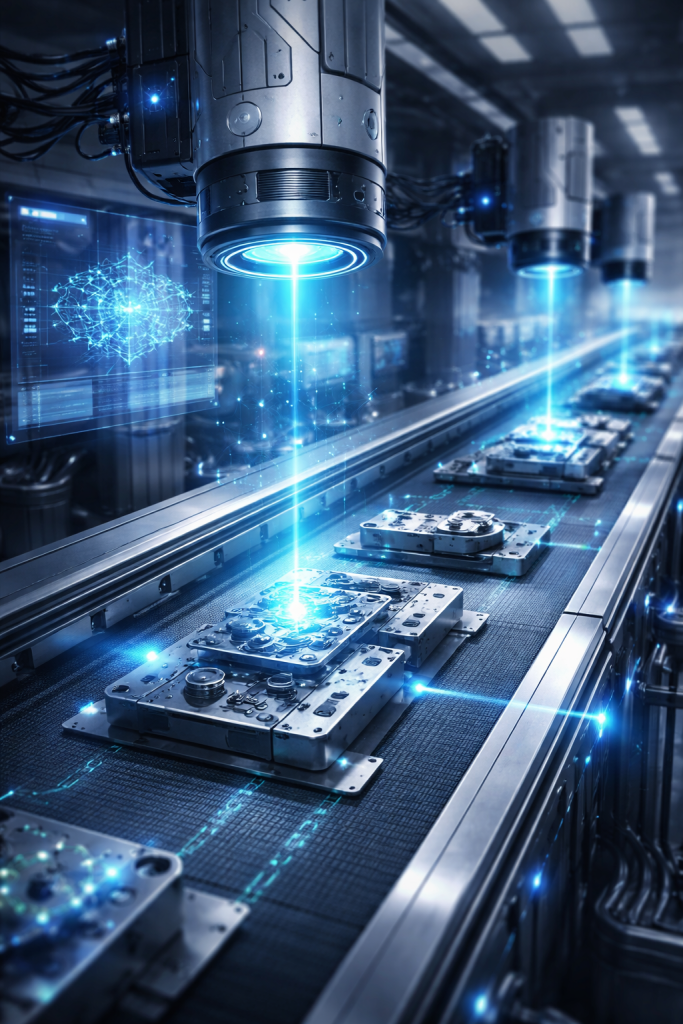
Transforming production with AI-driven vision solutions that streamline processes, enhance quality and provide real-time insights while delivering efficiency and precision at every stage of your manufacturing operations.
width 1200
computer vision
coreonex 1

About Coreonex

Explore the Journey of Coreonex in Advanced AI Technology and Quality Control Solutions

We are a leading AI vision technology company based in Penang, Malaysia, dedicated to transforming modern manufacturing through innovative solutions. Our solutions empower manufacturers to achieve higher quality, greater efficiency, and smarter operations through intelligent automation and solutions.
Our offerings range from AI-powered vision systems and smart inspection stations to advanced software and complete system integration. By automating inspection, analytics, and reporting, we help manufacturers reduce errors, accelerate decision-making, and optimize production workflows.
Serving industries such as electronics and semiconductor,  automotive, pharmaceutical, medical devices, food, agriculture, and logistics, we leverage advanced AI technology and deep industry expertise to deliver solutions that are reliable, scalable, and future-ready, enabling manufacturers to stay ahead in the era of next-generation production.

About Coreonex

Explore the Journey of Coreonex in Advanced AI Technology and Quality Control Solutions

We are a leading AI vision technology company based in Penang, Malaysia, dedicated to transforming modern manufacturing through innovative solutions. Our solutions empower manufacturers to achieve higher quality, greater efficiency, and smarter operations through intelligent automation and solutions.
Our offerings range from AI-powered vision systems and smart inspection stations to advanced software and complete system integration. By automating inspection, analytics, and reporting, we help manufacturers reduce errors, accelerate decision-making, and optimize production workflows.
Serving industries such as electronics and semiconductor,  automotive, pharmaceutical, medical devices, food, agriculture, and logistics, we leverage advanced AI technology and deep industry expertise to deliver solutions that are reliable, scalable, and future-ready, enabling manufacturers to stay ahead in the era of next-generation production.

Our Products

We offer AI-powered machine vision solutions designed to streamline manufacturing operations, enhance product quality, and automate inspection processes. Our solutions combine advanced AI vision systems leveraging Deep Learning, smart inspection stations, intelligent software, and complete system integration to provide an end-to-end quality control and automation platform.

These solutions support a wide range of applications, including surface defect detection, assembly verification, anomaly detection, OCR, barcode reading, and predictive analytics. By harnessing the power of AI and Deep Learning, manufacturers and supply chain partners can improve reliability, efficiency, and data-driven decision-making, all from a single integrated platform.

computer vision

Key Features

Advanced AI Model Training & No-Code Deployment

Leverage deep learning to train AI models on images of parts and defects. A no-code interface makes it easy to label data, train models, and deploy solutions without requiring AI expertise. The system continuously improves over time as more data is collected.

Centralised AI Data Processing

Collect and process visual data from multiple production lines in one platform. Supports deployment on devices or in the cloud, enabling real-time inspection and scalable operations across locations.

Accurate Defect Detection

Detect defects with high precision by analyzing patterns such as texture, shape, and subtle variations. Capable of identifying micro-defects and unknown issues while reducing false detections.

Automated Decision-Making & Process Optimization

Automatically classify, sort, and trigger actions (e.g., rejection or alerts). Reduces manual inspection, minimizes errors, and improves production efficiency.

Real-Time AI Inference & Predictive Insights

Analyze data in real time to detect issues instantly. Generate insights on defect trends, root causes, and process performance to support faster decisions and continuous improvement.

Continuous Learning & Adaptive Improvement

AI models continuously adapt by learning from new data, ensuring long-term accuracy across changing products and environments.

Deep Learning Technologies

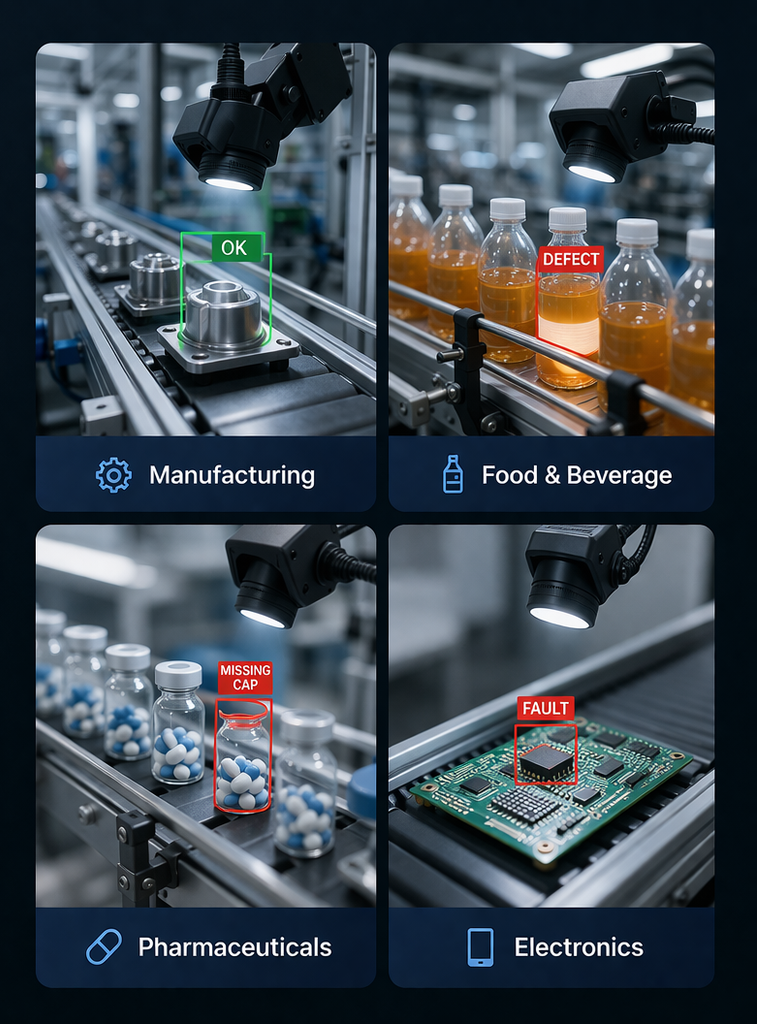
Our vision solution, powered by advanced deep learning technologies, can be applied across a wide range of industries to automate quality control and defect detection. In electronics and semiconductor manufacturing, it supports precise inspection of components such as PCBs and wafers. In the automotive sector, it helps identify surface defects, assembly issues, and misalignments. In pharmaceutical and medical device production, it ensures packaging integrity and product consistency. For food and agriculture, the system detects defects such as bruising, contamination, and irregularities while monitoring overall product quality. By leveraging intelligent AI models, the solution enables faster, more consistent, and highly accurate inspections, improving product quality and operational efficiency.

How a Deep Learning Vision System Works:
1
1. Input (Image Capture)

The system captures images of parts or components from production lines using cameras or vision systems, including both good parts and potential defect samples.

previous arrow
next arrow
1. Input (Image Capture)

The system captures images of parts or components from production lines using cameras or vision systems, including both good parts and potential defect samples.

2. Feature Learning (Automated Representation Extraction)

Deep learning models automatically learn relevant visual features directly from the data. Instead of relying on manually defined rules, the system identifies patterns such as shapes, textures, colors, and structural details that distinguish normal from defective items.

3. Training & Inference (Model Learning and Decision-Making)

The model is trained on labeled datasets to understand the differences between acceptable and defective products. Once trained, it can analyze new images and classify them into categories such as “OK,” “NG,” or specific defect types.

4. Output (Prediction & Action)

The system produces probability-based predictions indicating whether a product meets quality standards. These results can be integrated with automation systems to trigger sorting, rejection, alerts, or further inspection.

Our vision solution, powered by advanced deep learning technologies, can be applied across a wide range of industries to automate quality control and defect detection. In electronics and semiconductor manufacturing, it supports precise inspection of components such as PCBs and wafers. In the automotive sector, it helps identify surface defects, assembly issues, and misalignments. In pharmaceutical and medical device production, it ensures packaging integrity and product consistency. For food and agriculture, the system detects defects such as bruising, contamination, and irregularities while monitoring overall product quality. By leveraging intelligent AI models, the solution enables faster, more consistent, and highly accurate inspections, improving product quality and operational efficiency..

How a Deep Learning Vision System Works:
1. Input (Image Acquisition)

Images of products or components are captured using cameras or vision systems during the production process. These images may include both acceptable items and examples of defects.

2. Feature Learning (Automated Representation Extraction)

Deep learning models automatically learn relevant visual features directly from the data. Instead of relying on manually defined rules, the system identifies patterns such as shapes, textures, colors, and structural details that distinguish normal from defective items.

3. Training & Inference (Model Learning and Decision-Making)

The model is trained on labeled datasets to understand the differences between acceptable and defective products. Once trained, it can analyze new images and classify them into categories such as “OK,” “NG,” or specific defect types.

4. Output (Prediction & Action)

The system produces probability-based predictions indicating whether a product meets quality standards. These results can be integrated with automation systems to trigger sorting, rejection, alerts, or further inspection.

Why Choose Us

Proven Industry Expertise

We understand real manufacturing challenges and deliver practical AI solutions tailored to your operational needs across various industries.

Reliable Quality & Performance

Our solution ensures consistent, high-accuracy inspection results, helping you maintain product quality and reduce defects.

Flexible & Scalable Deployment

Easily integrate with existing production lines and scale across multiple sites as your business grows.

Efficiency & Business Value

Reduce manual effort, lower operational costs, and improve productivity with faster inspections and data-driven decision-making.

Transform Your Manufacturing Processes Today!

Contact Us

Name
Contact Number
Email
Message
The form has been submitted successfully!
There has been some error while submitting the form. Please verify all form fields again.
Phone

+604-6118576

Email

sales@coreonex.com

Location

91A, Lebuhraya Kampung Jawa, Kawasan Perindustrian Bayan Lepas, 11900 Bayan Lepas, Pulau Pinang

Scroll to Top